


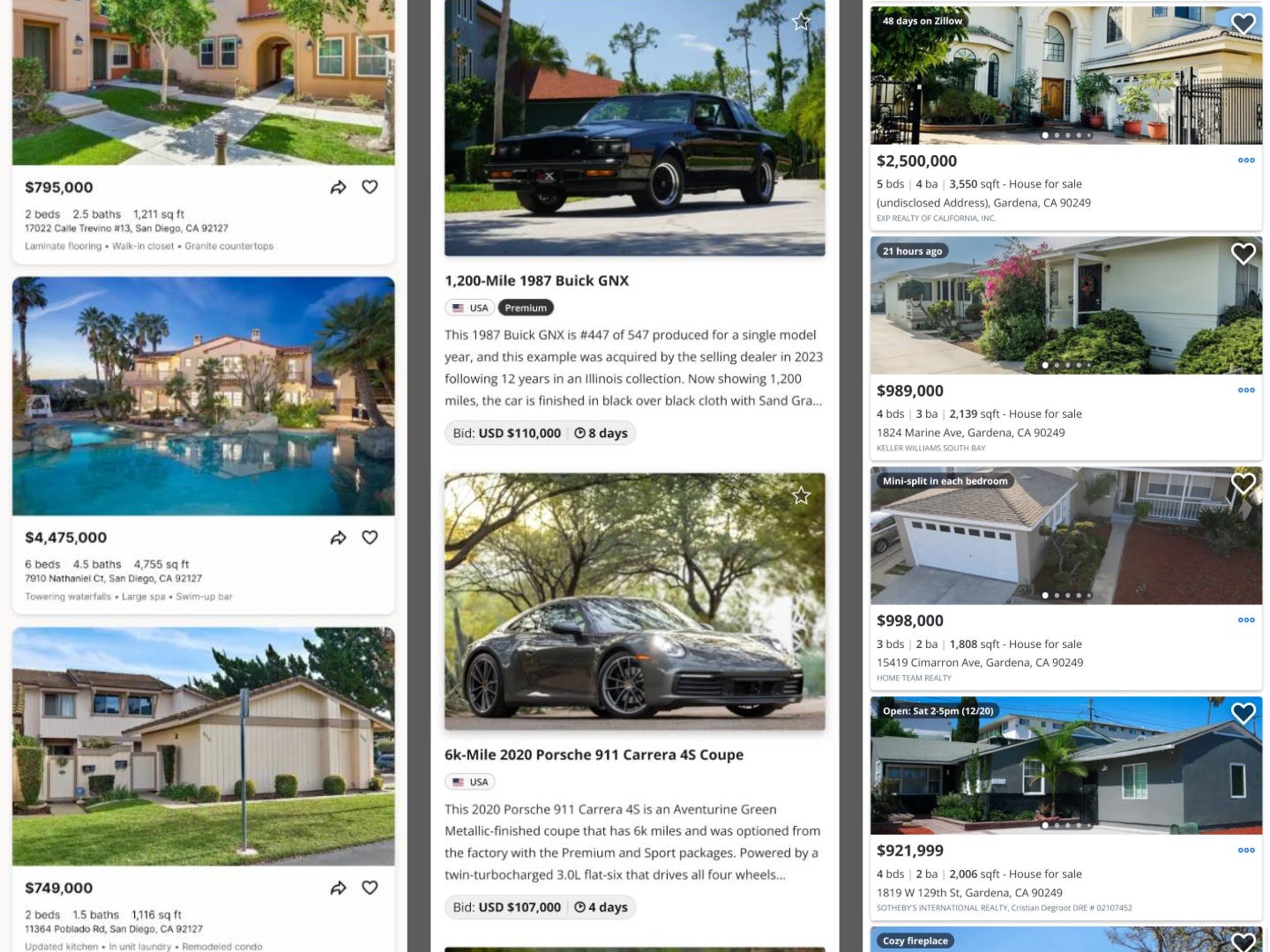
SAN FRANCISCO—According to a growing body of obvious evidence, Zillow and Redfin have successfully expanded the housing crisis, and Bring a Trailer has followed in their footsteps by delivering the same amazing corporate experience to car enthusiasts across the nation.
Housing analysts say Zillow and Redfin helped transform modest single-family homes into speculative assets, largely by convincing everyone to sell theirs at rock-bottom prices and yelling “mine” whenever another family wants to buy it. Homes are no longer bought to live in, but to be “parked,” “leveraged,” and “flipped,” preferably by someone named Chad who owns three Airbnbs and thinks he’s an influencer.
Meanwhile, Bring-a-Trailer has applied the same logic to enthusiast cars, bravely answering the question: What if joy was priced as if it were completely out of reach for the normal consumer?
Once-affordable cars, E36s, NA Miatas, anything with pop-ups or a carburetor, are now described using phrases previously reserved for yachts. Listings routinely cite “Owned by Paul Walker,” “Extremely rare spec,” and “future classic,” despite the vehicle being a 30-year-old Japanese econobox that still smells faintly of stale cigarettes.
Car enthusiasts, known for rational decision-making, have eagerly fallen for this obvious scam. “I’m not driving it,” said one owner of a bone-stock Civic Si. “I’m preserving its value so the next owner can enjoy it.” The car has been on jack stands since 2019 and has appreciated mostly in theory.
Experts warn the trend shows no signs of slowing. Zillow continues to reassure buyers that prices are “cooling,” Redfin insists now is “still a great time to buy,” and Bring-a-Trailer commenters remain convinced that every auction is a once-in-a-lifetime opportunity, right up until the next identical car sells for more money a week later.
At press time, enthusiasts were reportedly pivoting to bicycles, only to discover they are also being used to launder money.