


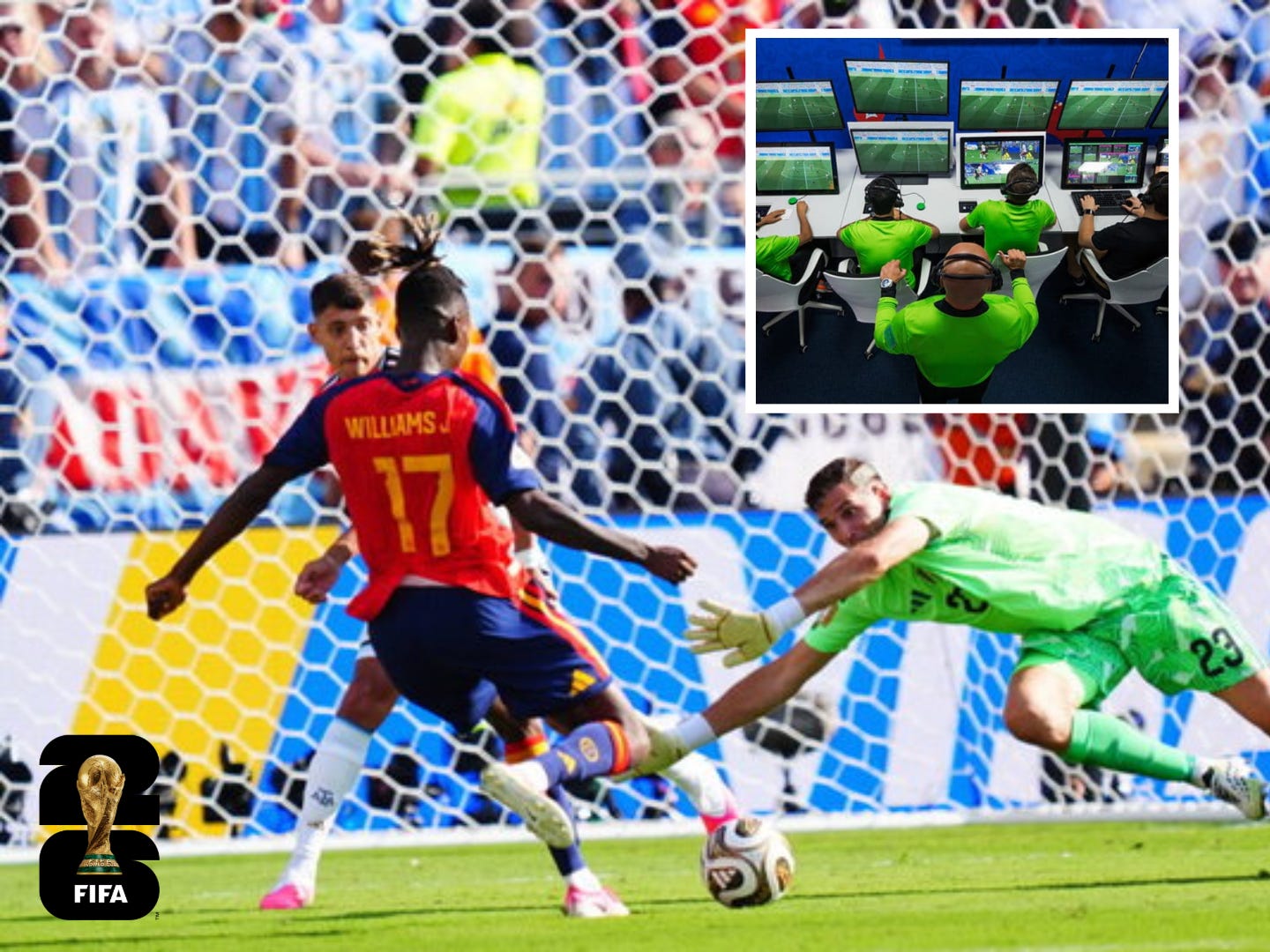
EAST RUTHERFORD—Despite receiving what analysts described as “every performance advantage legally and morally available,” Argentina’s twelfth man was unable to generate enough pace Sunday as VAR fell short in its bid to prevent Spain from becoming World Cup champions.
FIFA officials confirmed the video review system entered the match in peak condition after spending months preparing for the final with upgraded cameras, superhuman slow-motion capabilities, and enough processing power to analyze routine shoulder-to-shoulder contact from seventeen different angles before confidently making the wrong call.
“We threw everything we had at Spain,” said VAR while requesting another review. “Frame-by-frame analysis, bad foul calls, and at one point we even reviewed whether Spain’s goal could be retroactively removed. Unfortunately, they just kept playing better.”
According to officials, concerns first surfaced midway through the second half of extra time after VAR spent nearly six minutes searching for a foul in the buildup to Spain’s goal. After exhausting every available camera angle (and several unavailable ones) officials determined there was no evidence to overturn the play before overturning it anyway.
Engineers and referees attempted multiple performance adjustments during the match, including increasing replay sensitivity, recalibrating the “clear and obvious error” threshold, and installing software capable of moving the offside line whenever necessary.
“The hardware wasn’t the issue,” explained FIFA president Gianni Infantino. “The system was operating flawlessly. It successfully found every opportunity I could give Messi. Spain just kept surviving it.”
The effort ultimately proved insufficient as Spain held on to secure the championship, marking the first documented case of a team overcoming what soccer experts simply refer to as “a fix.”
Following the defeat, FIFA announced an offseason development program aimed at improving the system before the next major tournament. Planned upgrades include AI capable of detecting penalties before contact, an algorithm that automatically stops play whenever an Argentine player appears mildly inconvenienced, and a formal request that Lionel Messi remain healthy enough to play in the 2030 World Cup.