


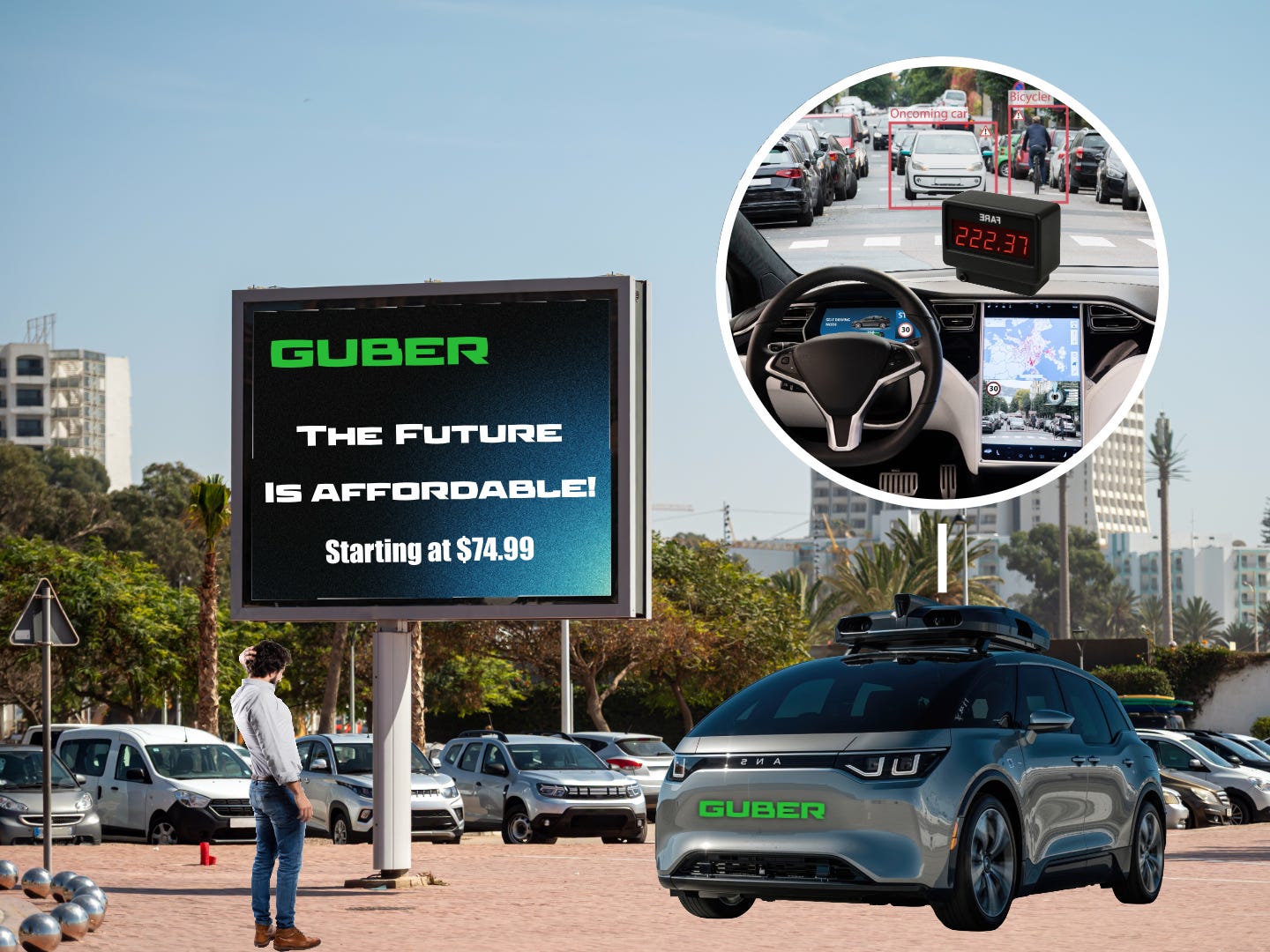
SAN FRANCISCO—Ride share company Guber made the unsurprising decision to replace all its drivers with self-driving cars this past weekend, in a move expected to save millions in labor costs that customers will absolutely not benefit from. The move is part of a growing trend of robots replacing all the labor so that eventually robots are the only ones making any money, which is perfect timing because it is becoming too expensive for anyone to exist.
“The technology is finally here and we must take advantage,” said Guber CEO Iggy Norant. “With a full fleet of self-driving cars everywhere, you will no longer have to deal with awkward conversations, surprise detours, or safety. The only real cost is a dwindling consumer economy caused by a compounding and incessant need to not pay the workforce anything, which is something we are willing to sacrifice to provide our remaining customers with great service!”
As fast-food chains, software companies, and now rideshare companies continue replacing their workforce with sustainable and ethical alternatives like artificial intelligence and robots funded through government programs using taxpayer money, many are beginning to wonder: Who the hell has money to pay for this crap?
“This is difficult, but if the robots need the money more than me, I understand,” said ex-Guber driver Roberto Peña, with visible disappointment in his eyes. “I personally don’t believe the robot’s family is more deserving than mine, but Guber does, and that has to mean something, right?”
On the surface, it appears the drawbacks of this decision outweigh the benefits, but critics are missing one key group. The elite billionaire class.
They still have money.
“If we replace enough workers with robots, eventually the only people left who can afford our services will be the people who own the robots,” said Norant. “And luckily, those are the only customers we really care about.”
Industry analysts say funneling resources at exponential rates toward the hardest-working geniuses in society will allow them to procreate and make more little billionaires, who can then continue mankind’s progress toward new frontiers.
Beyond Mars.
Beyond Uranus.
Beyond their anuses.
Beyond the universe itself.
Critics have gone on and on with concerns about exploitative labor practices, so executives provided automation that finally solves that problem by creating a workforce they can exploit indefinitely without complaints, bathroom breaks, health insurance, 401ks, or families to drag them down.
Wealth preservation experts dismissed concerns that AI robots could one day revolt, stating that humanity has never produced any movies, books, television shows, or video games warning about exactly that. At least none they have seen.
It’s difficult to say whether the impact of these decisions will be catastrophic or totally catastrophic, but what’s certain is that it’s already too expensive for regular people anyway, so companies are prepared to forget about them and focus on innovative technologies that can increase the number of trillionaires in the world.
Because if billionaires have gotten us this far, imagine how good things will be once we have trillionaires.