


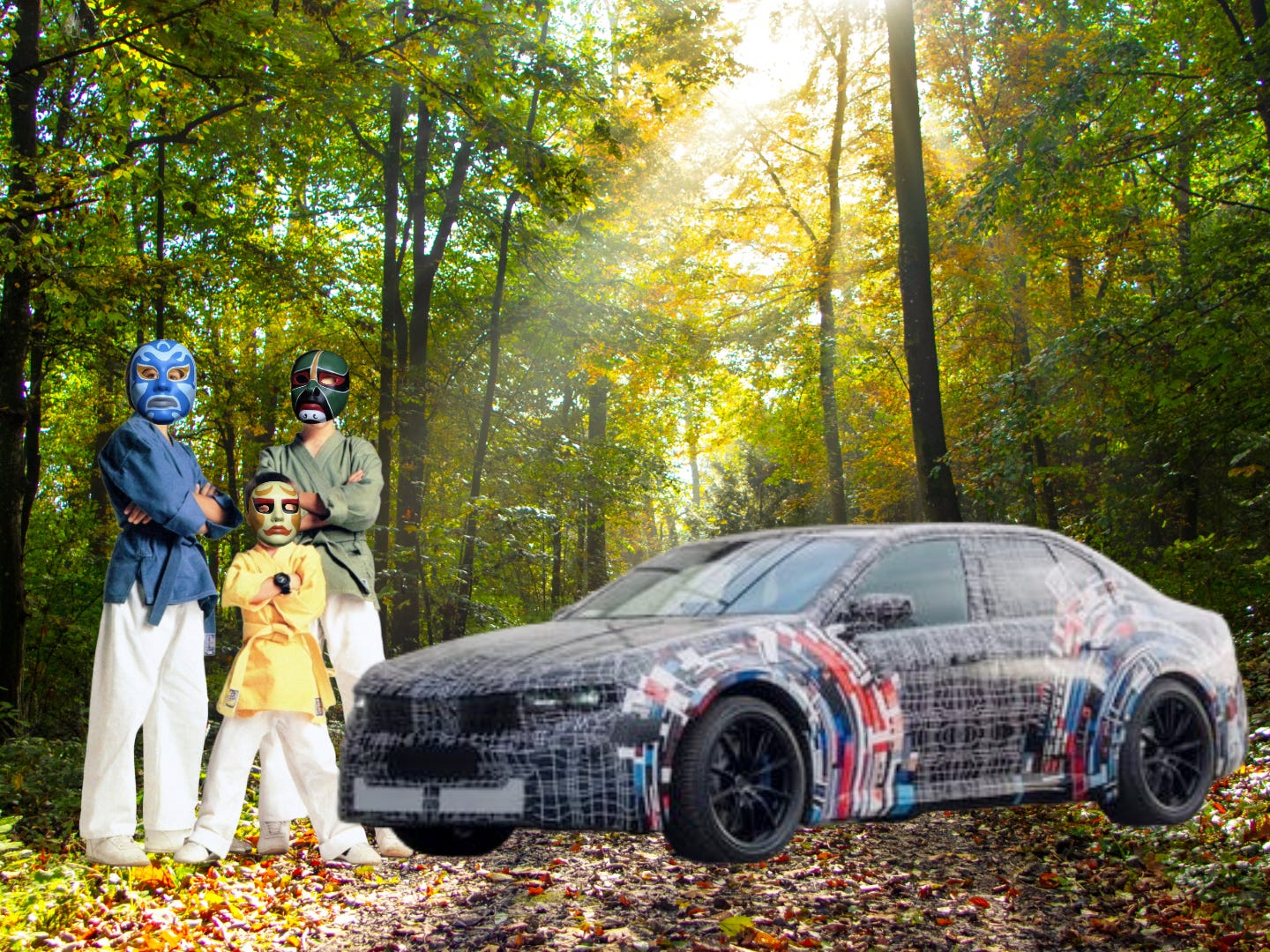
MUNICH—Executives are calling it a “necessary correction,” and for once an executive might be right. BMW has announced that development of its next-generation M3 will include a new testing phase conducted entirely by the three ninjas, citing growing concerns that modern quality control methods have become “too detached from what makes things good in the first place.”
According to secretly obtained internal documents, the program, codenamed Project Tum-Tum, will replace several conventional procedures like computer simulations and crash testing with “hands-on, instinct-driven vulnerability assessment,” according to some engineers in bright blue gis.
“We’ve spent years refining data models, aerodynamics, and structural rigidity,” said lead development engineer Markus Feldmann. “But at some point, you have to ask yourself, would this car survive getting absolutely worked by three highly motivated children in a forest?”
Feldmann confirmed that early testing will have the M3 positioned in a remote wooded environment, where the three ninjas will take turns identifying “critical pressure points” through a combination of kicks, flips, and words of encouragement from their sensei.
“The dummy doesn’t fight back. The barrier doesn’t adapt,” Feldmann continued. “But a kid named Rocky flying at your B-pillar on full send? That tells you everything you need to know about structural integrity.”
BMW insists the decision is rooted in a broader realization that modern engineering has drifted too far from the raw, unfiltered benchmarks of the past.
“There was a time when things just felt right,” said one senior designer, staring at a paused VHS copy of 3 Ninjas on a small TV in the testing lab. “You didn’t need a spreadsheet to tell you something was durable. You just watched it take a hit and said, ‘Yeah, that’s good.’ We’re trying to get back to that.”
Early reports indicate the M3 prototype has already undergone several rounds of “stress testing,” during which engineers observed in silence as the vehicle was subjected to a flurry of strikes, followed by a brief moment where one of the ninjas nodded approvingly.
“That nod means more to me than any safety certification,” Feldmann admitted.
BMW insists the approach is both rigorous and forward-thinking. “This is about rediscovering fundamentals of the ’90s. The industry moved away from what worked. Some of these people are still driving E36s around without ever doing any maintenance on them,” Feldmann said.
Engineers teased that the next phase of development might involve removing the digital interface for “something simpler,” with early concepts including a Game Boy and a Capri Sun holder.